London’s been my home for the last five years, and I firmly believe it hosts the best restaurants in the whole of the UK – and also the worst. Many establishments have left me questioning how they manage to stay open with what they’re dishing out. The only answer I can fathom is that they must be fronts, or benefit from the footfall of drunks stumbling home (shoutout to a certain chicken shop in Camberwell).
Still, despite its pitfalls, there aren’t many better places in the world to explore global cuisines before launching into a new country to try the real thing.
Step forward, Georgia.
Luckily, we didn’t have to travel too far to find a Georgian restaurant in north London. A 30-second walk from Turnpike Lane sits Gurmani, a quaint Georgian café/restaurant.
We didn’t start with the dessert (we’re not animals), but since our blog celebrates everything that is sweet, why not start with the end dish.
(Warning! Georgians like walnuts).
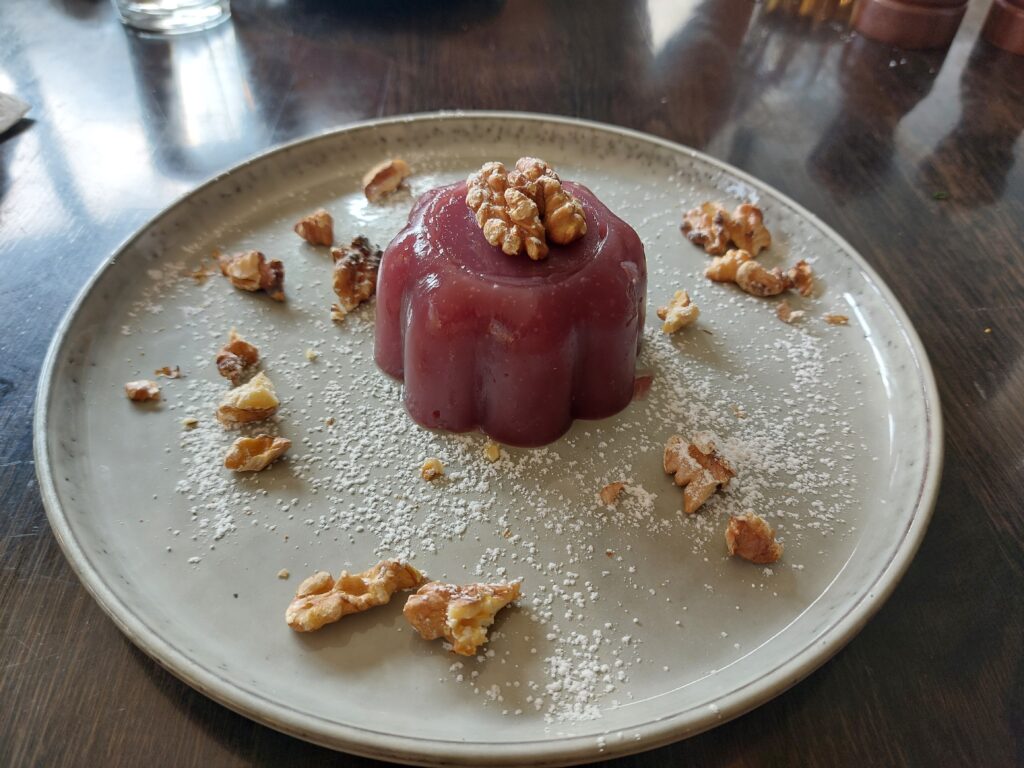
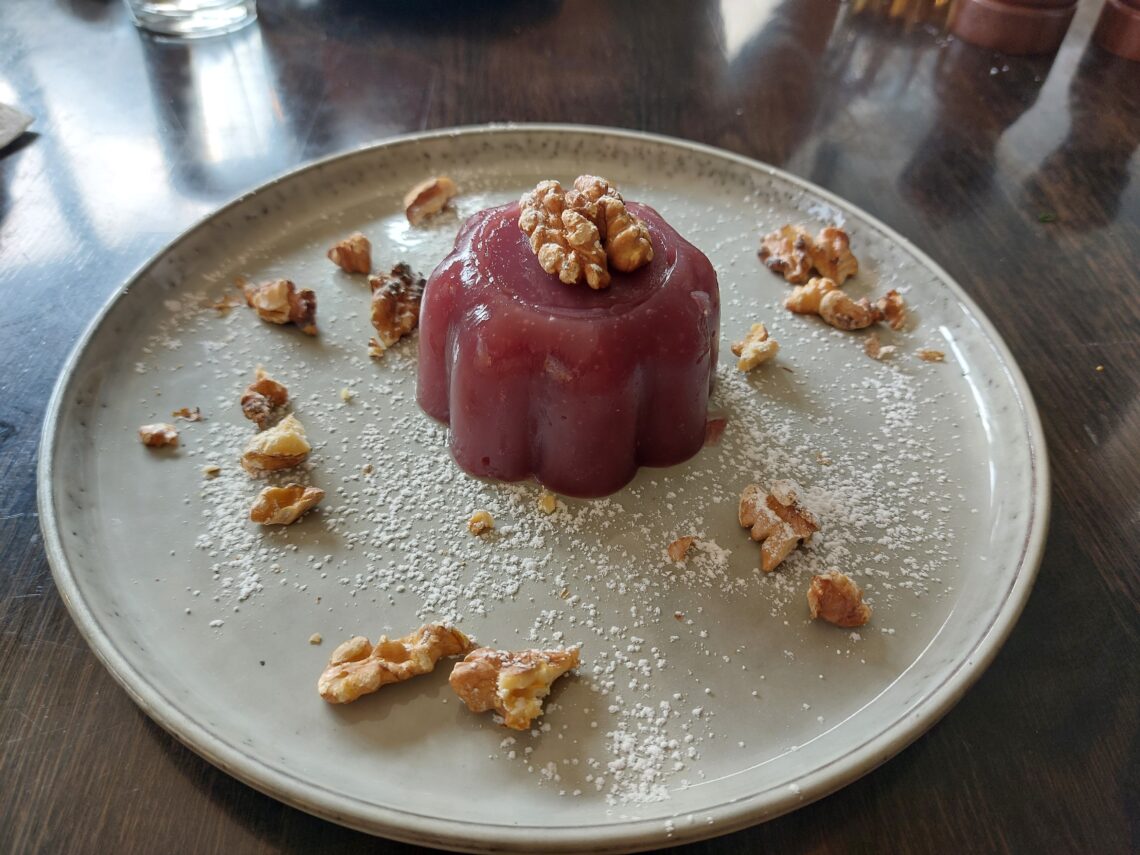
We opted for the Pelamushi, a peculiar looking jelly stool with a walnut on top.
A common grape-based sweet dish explained why my glass of red wine went down so well. The Georgians take their wine seriously.
I was expecting an overload of grape juice flavour. I was wrong. The grape flavour was subtle, with the texture almost porridge-like. However, to my surprise, the dish was quite light and not too taxing, coupling well with the walnut and sprinkled sugar.
Sadly, I felt it was missing one more component that would make me come back for more. Apparently, it’s sometimes served with honey, which would improve it.
A dessert I’m looking forward to trying in its homeland. Rating: 3.2 out of 5 stars.
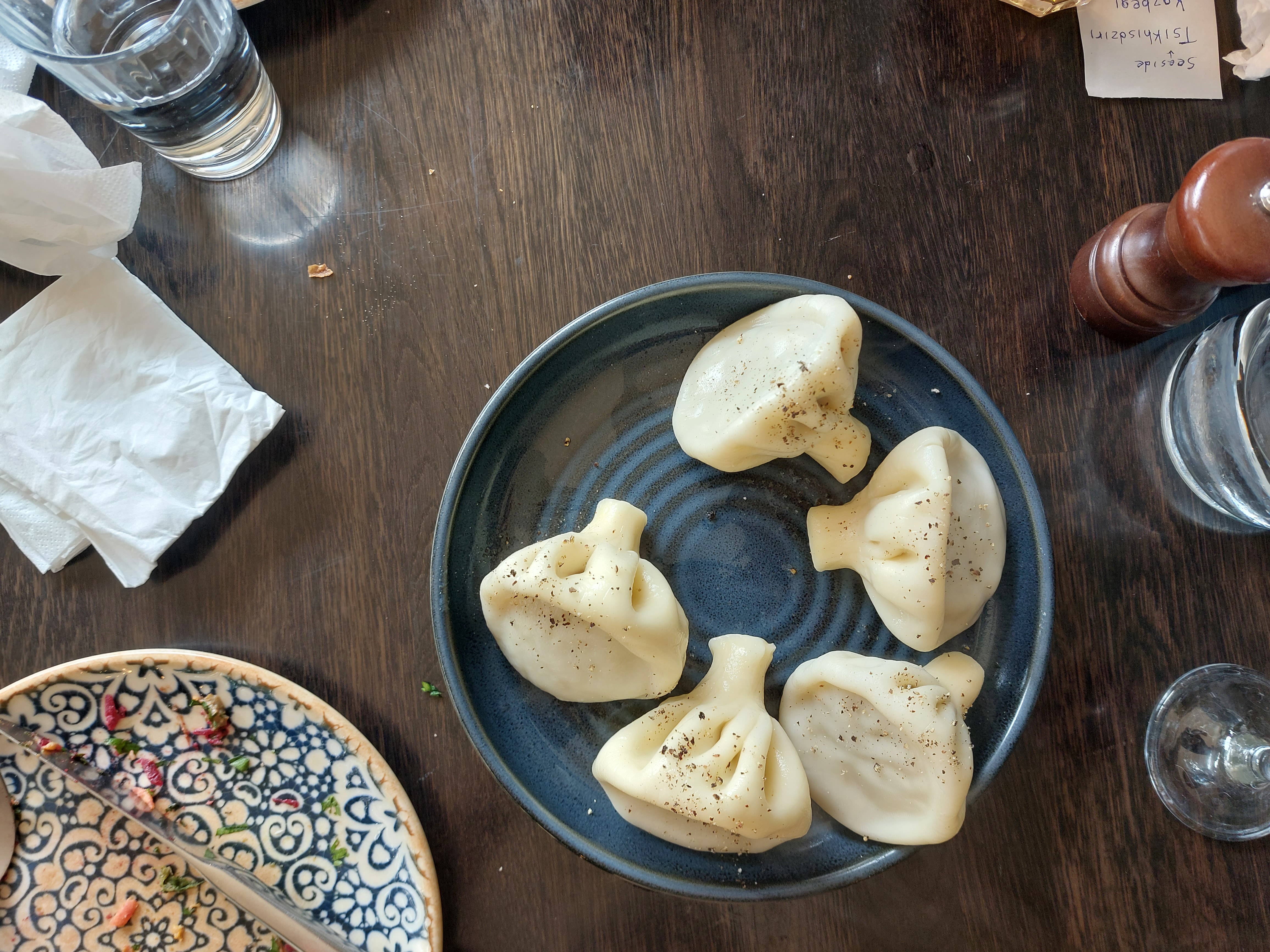
The main course was suggested by the waitress, who demanded we try their meat Khinkali: five large dumplings filled with minced pork, beef, and mixed herbs.
From sight alone, the dumplings looked odd, and since they are often referred to as the “bellybutton”, the natives seem to agree.
Embarrassingly, I had to ask the staff how to actually eat them. Turns out it’s traditionally by hand, using the stalk as a handle.
Now, the real star of this dish wasn’t the meat inside, it was the broth. Once you pierce the dumpling, you’re met with a flood of savoury juices: a rich, spiced mix of meat and herbs that knocks you for six (in a good way).
Once the insides are gone, you’re left with the stalk. Our waitress said she likes to eat it, but after nibbling on it, I wouldn’t recommend, tastes of raw dough.
Khinkali can be filled with lamb, mushrooms, or cheese. I’ll be trying all of these. Rating: 4.7 out of 5 stars.
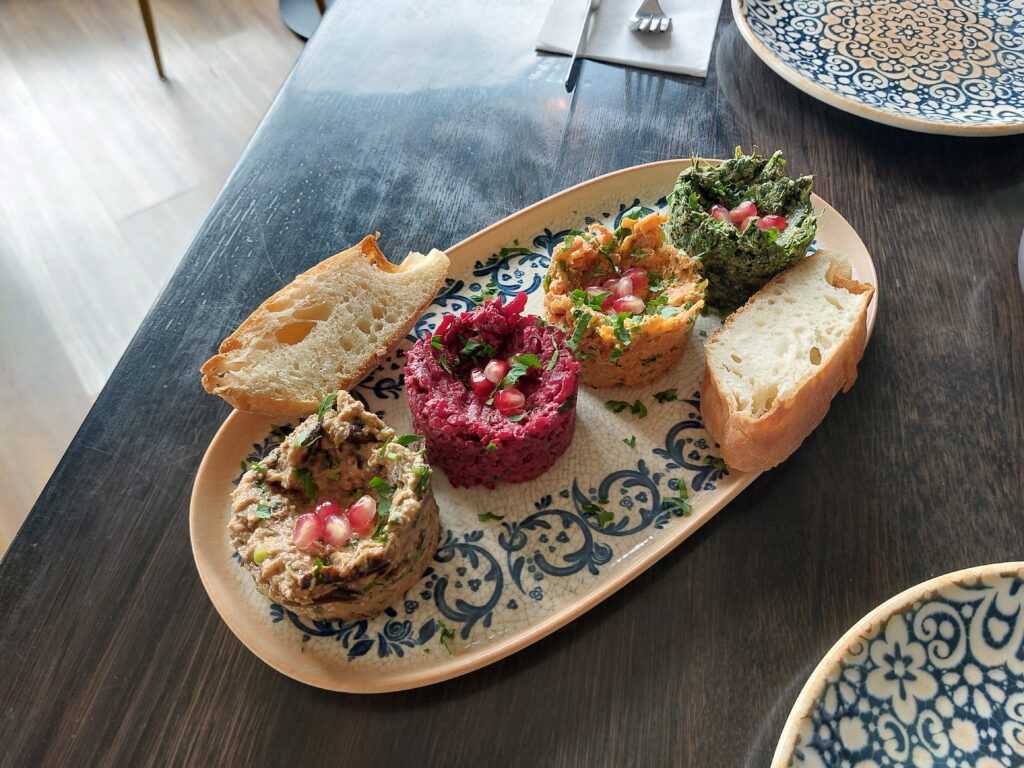
For our starter, we went for a Meze – which, to Georgina’s delight, was vegan. We were served Spinach Phkali, Beetroot Phkali, Carrot Phkali, and Aubergine Roll.
Phkali is a traditional Georgian dish made from chopped and minced vegetables mixed with ground walnuts. All four were bound together by a puréed walnut sauce.
My main issue was the ratio of Phkali to bread, we were left with only one thin slice each. I also found the spinach overpowering, which meant I couldn’t taste any of the walnut. The aubergine roll looked the least appealing visually, but I actually enjoyed it the most. Whereas the carrot and beetroot were both too sweet, outshining the other spices and flavours in the Phkali.
The pomegranate topping was a nice touch, but I thought this was the weakest of the three dishes. Rating: 3 out of 5 stars.
Overall, our visit to Gurmani has got us very excited to dive deeper into the sweet and savoury dishes of Georgia. And after chatting with our waitress, who recommended a few places for us to visit (see below), we’re counting down the days.
- BINA N37 in Tbilisi (rooftop looks inviting)
- Sofiko in Tbilisi (looks a bit too pricey for backpackers)
- Miti Taverna in Tbilisi (apparently the only Greek restaurant in the capital).
Next stop: Tbilisi.