Visit Lake Sevan in September, you avoid the summer crowds whilst still enjoying pleasant, lukewarm weather.
Following this advice from the online world, we planned a two-day stay – which we quickly regretted.
What’s Lake Sevan like in September?
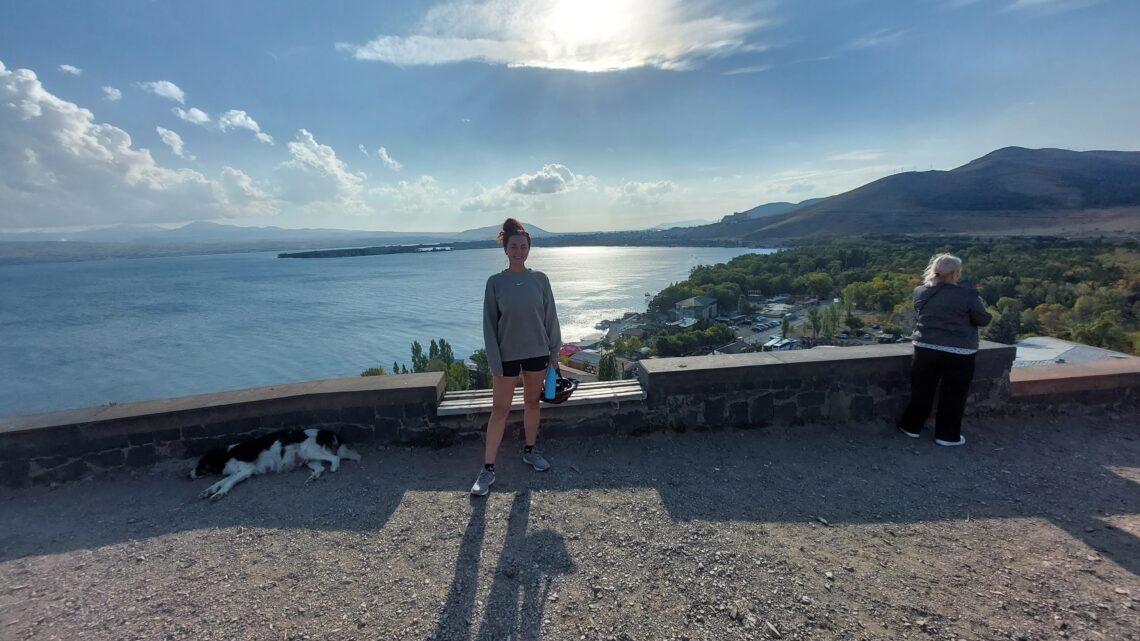
A popular Armenian holiday resort, Lake Sevan spans around 1,900 square miles, making it one of the largest lakes in the Caucasus region. In September, however, you’ll struggle to find tourists or local holidaymakers in the vicinity.
Instead, we found a mostly deserted lake with evidence of a half-arsed attempt at attracting visitors. Unfortunately, this has tarnished the natural beauty of the area, with scattered infrastructure that doesn’t compare to what you’d find in more developed lakes or seaside towns.
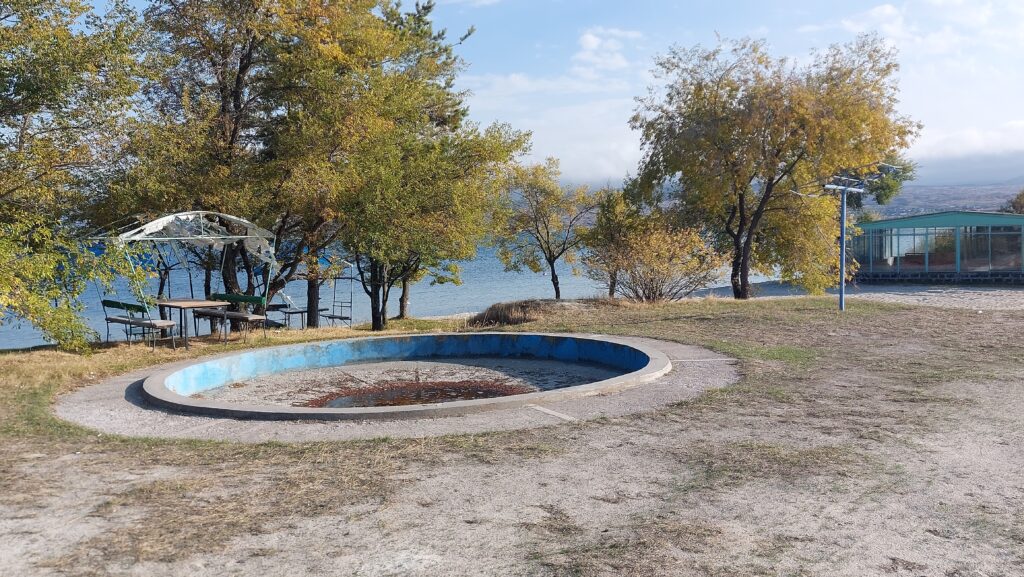
The weather ranges from highs of around 21°C to lows of about 6°C. Be warned, though: Lake Sevan sits at 1,900 meters above sea level, so the wind and thin air can make it feel colder than it actually is.
Fancy a bike ride?
The cooler September weather and less busy paths make it appealing to organise a bike trip in Lake Sevan. You’ll find many hostels and hotels around the area offloading makeshift rental bikes.
We stayed at Lake Sevan Hostel, and before I slate it, I would say that it was a great place to set base and very affordable… but be wary when hiring a bicycle.
Using Komoot to find bike trails to the Sevanavank Monastery, we set off. Though, we quickly realised that the whole route would be on a dual carriageway, cycling on the hard shoulder. Then, 10 minutes into the ride, my bike’s gears and chain both played up, making me ride the rest of the journey in first gear.
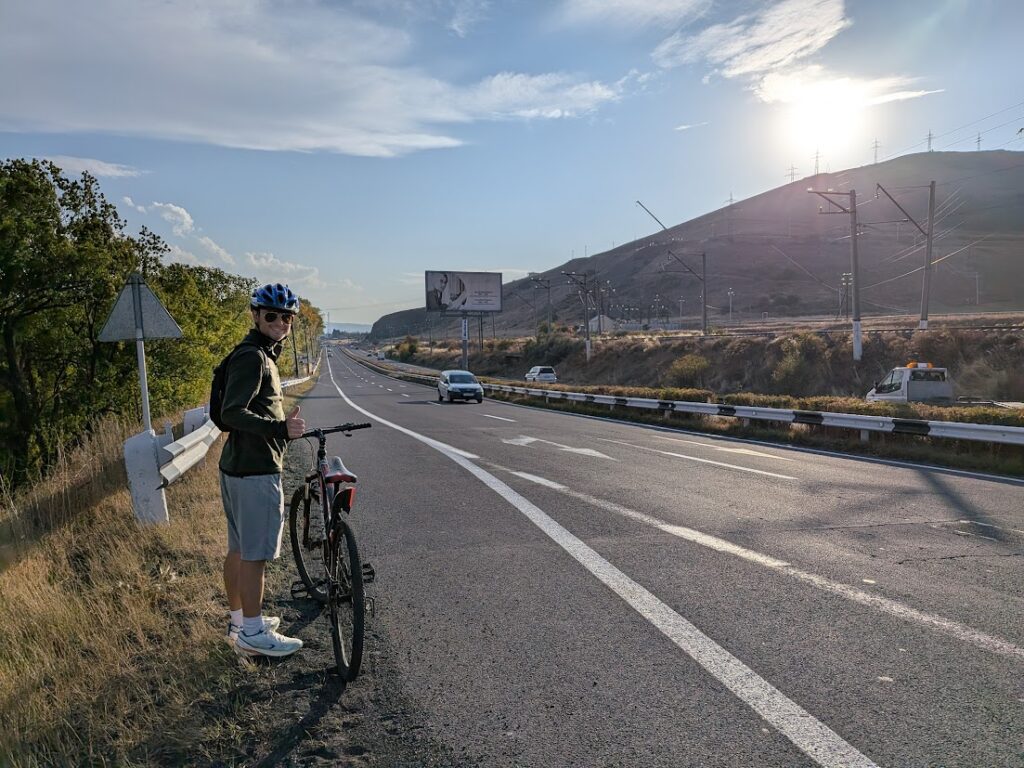
The idea of cycling around the lake sounds great, only if you enjoy riding on a motorway next to swinging lorries.
It’s not all that bad
Lake Sevan does have some pros, so don’t be put off by our negative experience of the place.
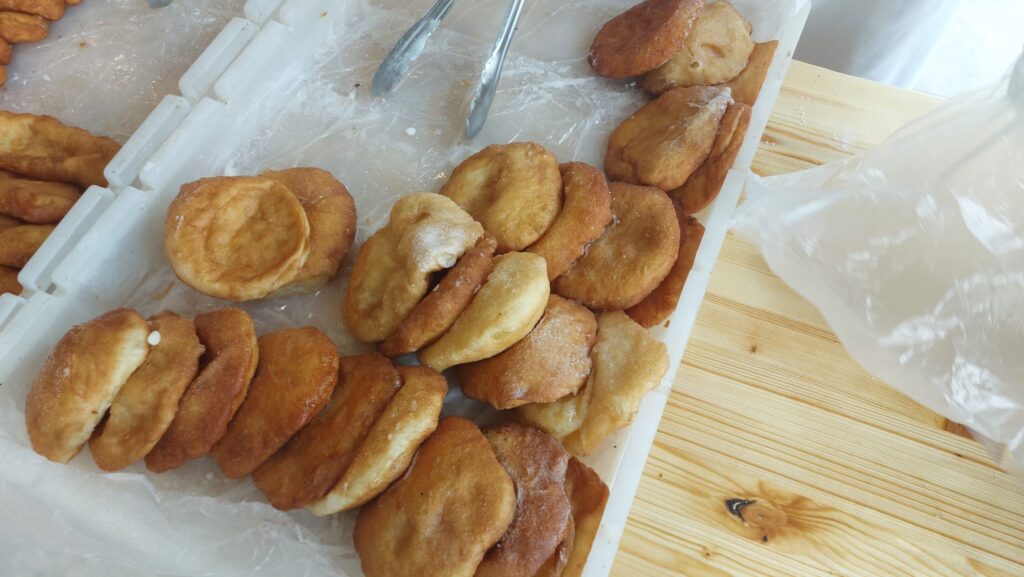
Firstly, bakeries. The perfect budget breakfast when travelling is finding a bakery for a pastry. In the town of Sevan, they don’t cost much and rank supreme for morning fuel.
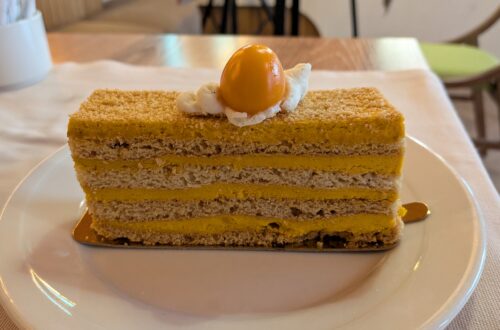
Gata, the Armenian buttery bread, might not be the healthiest option, but it’s a must-try around the lake, especially in the town of Sevan. The early bird catches the worm though, with bakeries quickly running out of fresh gata prepared for the daily punters.
As well as local bakeries, the town of Sevan also hosts numerous cute little cafés and restaurants. Many by the lake were closed in September, presumably only open during the summer. In the town, though, you’ll find a couple still going strong.
A highlight was the much-talked-about Bohem Studio – Teahouse. Not a traditional Armenian place, but a very welcoming tea room that attracts many expats (mainly the English).
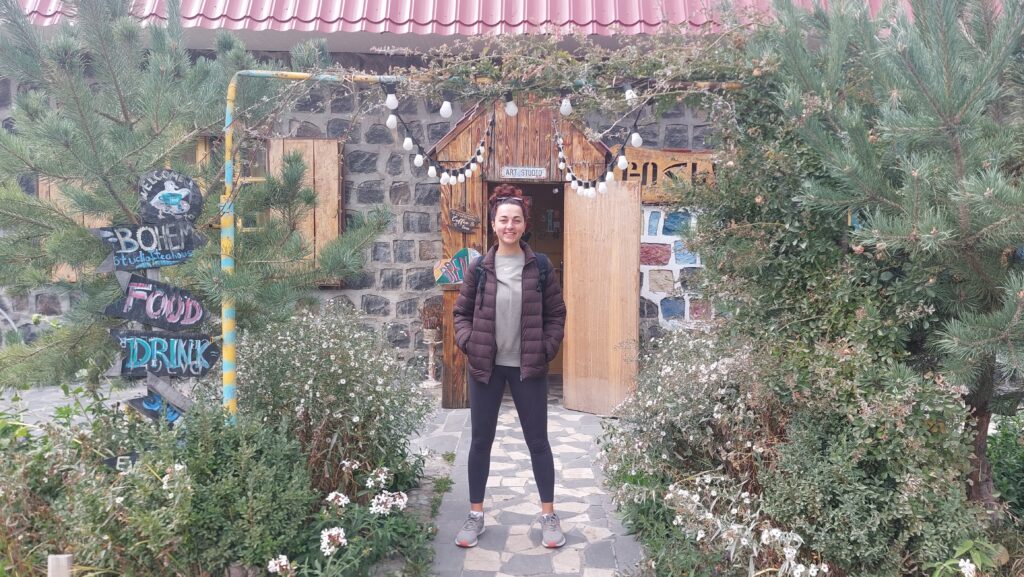
Not a lover of tea myself, I surprised myself when I enjoyed the local Lake Sevan pot of tea – although Georgina said it was very average.
Sevanavank Monastery. If you do one thing at Lake Sevan, make it the monastery. On arrival, you’ll be met with life that is missing from the surrounding areas of the lake, with many vendors and makeshift markets taking advantage of the swarm of tourists.
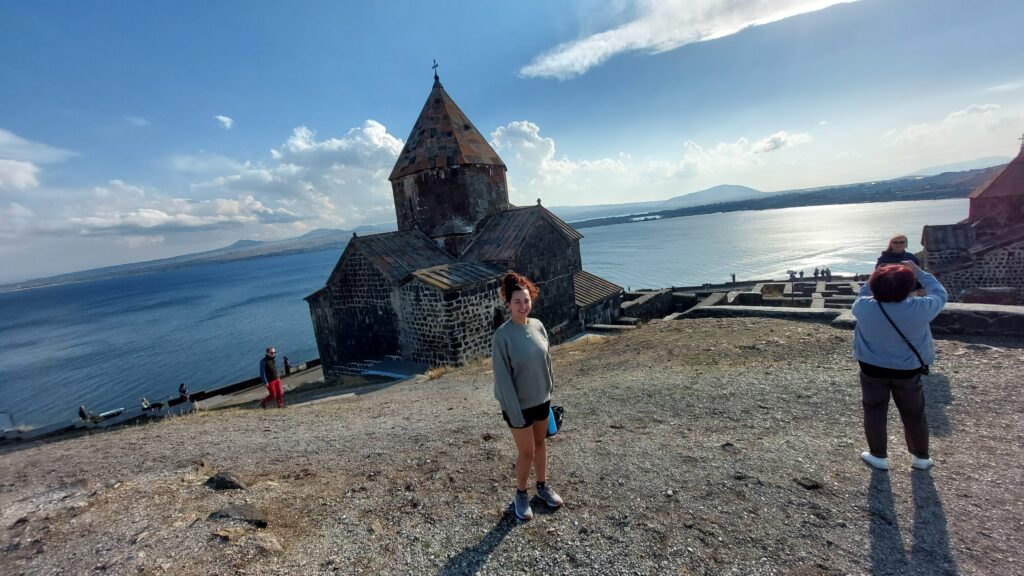
Fighting off the urge to drink the local beer after an uncomfortable bike ride, we both walked up the stairs to see the hilltop Sevanavank Monastery. The monastery dates back to 305 AD, making it older than its rival Khor Virap outside Yerevan.
The only downside was knowing that I had to cycle 9 km back on a very broken bike.
How to get there?
Lake Sevan is easy to get to and can be a good passing place for one night to see the monastery and experience the food in Sevan, before heading to Dilijan, Armenia’s little Switzerland.
On a budget, marshrutkas are key. You’ll find a regular marshrutka leaving every hour (from 9:00am to 6:00pm) from Yeritasardakan Station, costing just 500 AMD.