Planning a long-term backpacking trip across different countries and climates but not sure what to pack? We’ve got you covered.
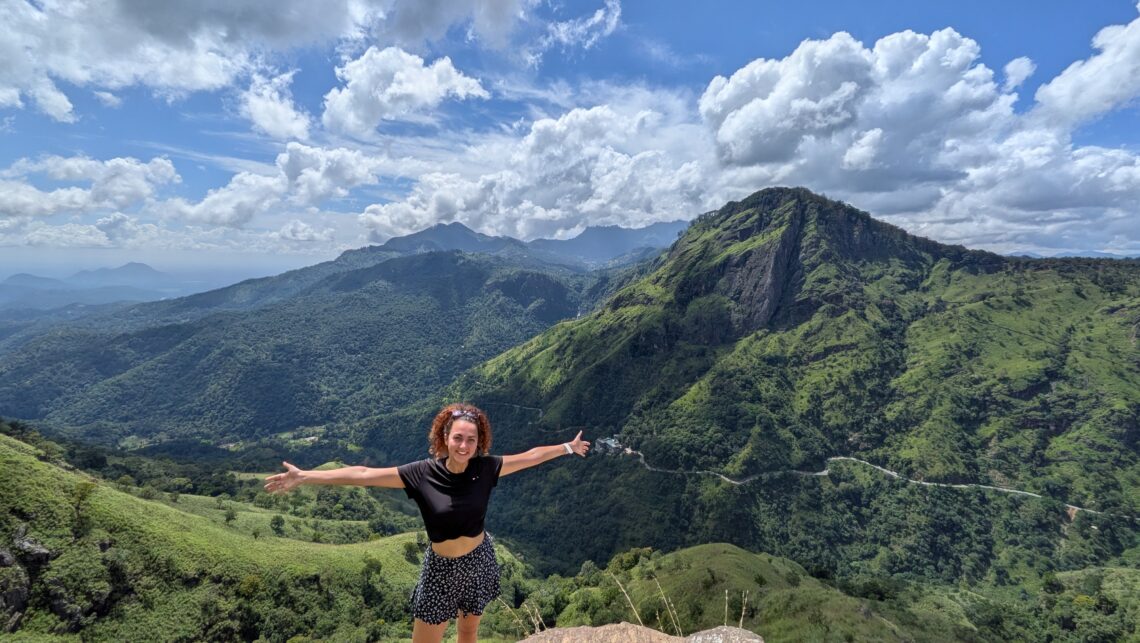
So far, Connor and I have been backpacking for the past 10 months. We’ve travelled through 14 different countries, all with different climates and a wide range of activities. From sleeping under the stars in the dry, hot deserts of India; exploring frozen lakes in northern Kazakhstan; and hiking lush green rainforests in Brazil. We’ve done a hell of a lot with only a handful of possessions in our 40L cabin bags plus a small day backpack.
We’ve been on the road for what feels like a while, so now feels like the perfect time to share what has proved genuinely essential and what, in our opinion, isn’t worth the real estate.
Find below our packing list for long-term around-the-world backpacking. For anything specific/ easy to purchase I’ll add a link to what we chose. These links may be affiliate links, so if you do end up liking the look of an item mentioned and purchase it from the click-through, we may earn a small commission.
Tips before you start packing
- Consider packing clothing with natural fibres so they keep fresher for longer.
- Pack to about 80% full to give yourself some spare space for future additions.
- Sounds obvious, but choose items bearing in mind what activities you wish to do whilst travelling.
- Avoid packing “just in case” items.
Backpack
Choosing the right backpack could make or break you when you’re on the move.
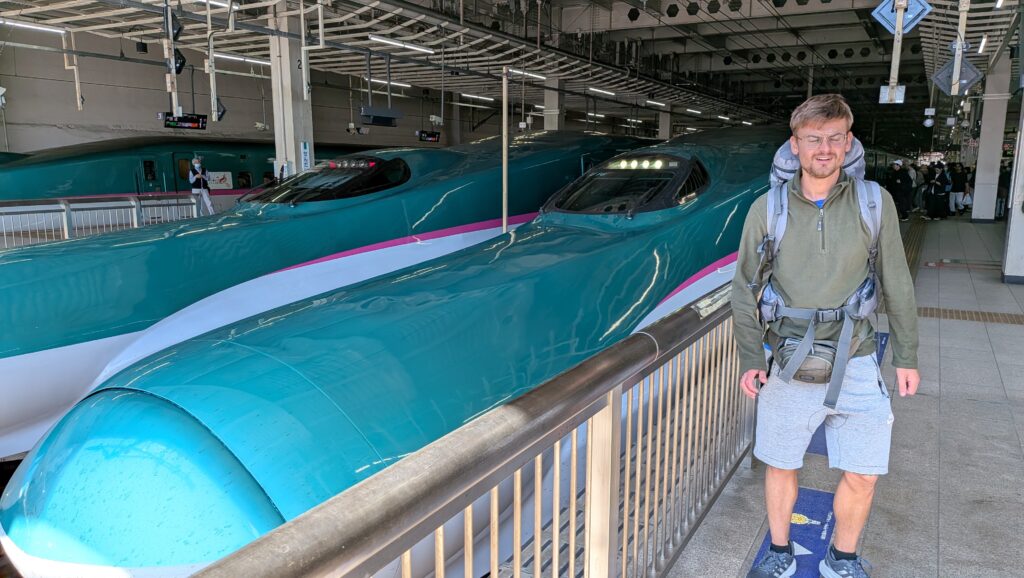
When making your choice, you must think about comfort as well as practicality. In addition, seriously consider whether you want to have a larger backpack or a smaller cabin-appropriate backpack. Each choice comes with pros and cons. For example, going with a larger 60L+ backpack will be heavier to carry around, but will also provide ease of space. A smaller 40L backpack will help you avoid costly luggage fees on flights, though requires more thought on what and how to pack it.
For our budget style of travelling, having 40L cabin-appropriate backpacks has been great. They have been easy to carry around between locations and have saved us a lot of money on flights. However, bear in mind we also accompanied them with a 20L day pack which we carry our shoes in and use for day excursions.
Below we will review in detail our thoughts on our chosen 40L cabin appropriate backpacks.
Georgina’s choice: Osprey Fairview 40L
After my brief research on what backpack to choose, I succumbed to buying the well-touted Osprey Fairview 40L backpack. Thankfully it’s design and quality help me to understand why the price tag is high.
What I appreciate: The clam-shell opening = very easy to pack and find items. The rear airspace design = helps airflow whilst carrying it to reduce how sweaty my back becomes. The ‘secret’ side pocket/ laptop sleeve = great for keeping important documents/ things flat.
What I don’t appreciate: The ‘secret’ side pocket/ laptop sleeve = takes up too much space within the bag. In my opinion, it has some pointless buckles. But perhaps I don’t understand what they are!
Connor’s choice: Ozark Trail 40L Hiking Bag (unavailable closest style here)
Connor valued price when choosing his backpack, not necessarily researching different brands styles.
What Connor appreciates: Its tall design = easy to pack and fit his items within. Number of pockets = easy to categorise where to store items.
What Connor doesn’t appreciate: The top-loader design = necessary to unpack everything to find something specific.
Tips when choosing a backpack
- Think about your preferred access style (top loader, clamshell, roll-top, panel loader etc).
- Does it have the necessary pockets you need?
- Does it have a hip belt? (undeniably useful for when the pack is heavy)
- Does it have enough padding on the straps, back, belt?
Clothing
Probably the hardest element of packing for long-term backpacking, is what clothing to bring and how much of each. The decision becomes even more important once you add the layer of only fitting it into a 40L cabin-appropriate backpack.
As we’ve been travelling, we’ve slightly adjusted what clothes we’ve had on us. For example, I brought too few t-shirts originally and too many strappy tops, whilst Connor brought with him too few essentials such as boxers and socks.
Ten months in, we’ve found our rhythm whilst also getting very familiar with local self-serve laundrettes.
Basic clothing
- x7 t-shirts
- x2 shirts (Connor)
- x2 strappy tops (Georgina)
- x2 loose shorts
- x1 loose, light, full-length trousers
- x1 pair of jeans
- x10 underwear
- x7 socks (+2 hiking specific socks)
Consider the materials: As mentioned before, consider bringing clothing with natural fibres such as cotton or merino wool. Both generally breathe better than many synthetic fabrics and tend to stay fresher for longer. If you are in a situation of needing to re-wear t-shirts, those with natural fibres will have better chances of smelling acceptable!
To jean or not to jean: We debated hard on whether we should bring jeans with us. Jeans take up space, but they are a great go to for colder conditions. Our verdict: it’s worth it.
Doing laundry: We typically do laundry every 7-10 days, which is why we don’t feel the need to pack more clothes. Across much of East Asia and Latin America, 24-hour self-service laundrettes are common and easy to find. In Central and South Asia, however, you’ll more often come across hostel laundry services or local wash-and-fold businesses rather than self-service facilities. Either way, washing clothes on the road has been straightforward and inexpensive, so don’t let laundry worries tempt you into overpacking.
Outerwear
- x1 thermal long sleeve top
- x1 fleecy joggers
- x1 jumper/ sweatshirt
- x1 waterproof jacket coat (ideally compressing into small sac)
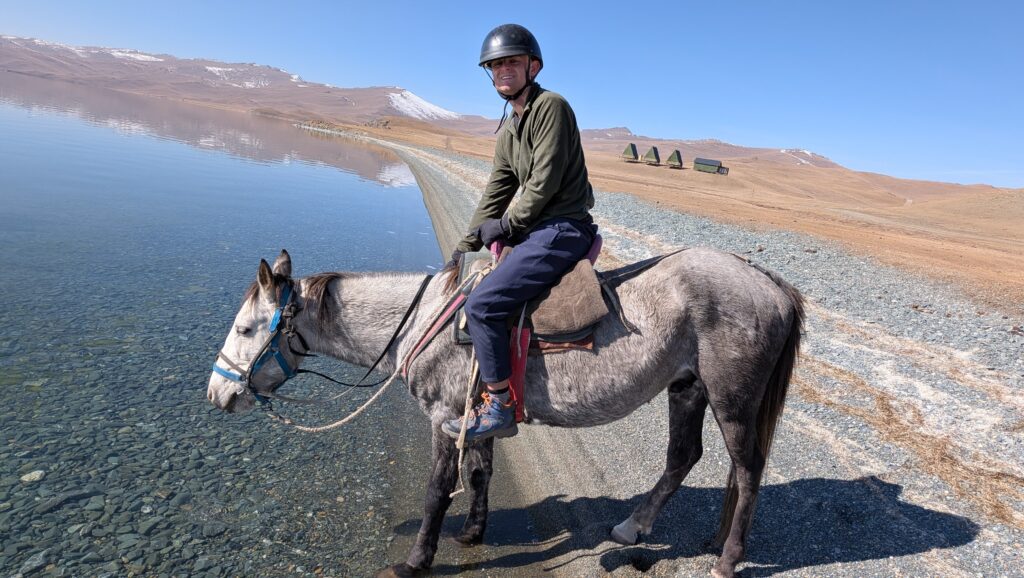
Why thermals? Relative to other items, our thermal tops and fleecy joggers have been our least used items. However, when these items are needed, they really have been essential. Horse trekking through snow in Kyrgyzstan and summiting peaks in the Nepalese mountains certainly wouldn’t have been as enjoyable without them. Joggers are also great when all you want to do is laze around in comfort no matter the temperature.
Activewear
- x1 swimwear
- x2 sports t-shirts
- x1 sports shorts
- x1 gym leggings (Georgina only) / trekking trousers (Connor only)
- x2 sports bras (Georgina only)
Separate activewear: Connor and I love to hike, cycle and engage in general sports, so having specific activewear has been essential for us. Having separate sports clothing means we don’t have to think about getting our day-to-day outfits too sweaty. Plus, going on a 5km run wouldn’t feel right in linen shorts.
Shoes
When thinking about what shoes to bring, the most important aspect here is that each shoe must have a purpose and therefore the real estate it takes up in your travel bag(s) is worth it. Connor and I have x4 pairs of shoes with us in total. It sounds excessive, but it works for our style of travel.
- x1 daily-wear trainers
- x1 above the ankle waterproof hiking boots
- x1 running shoes (for all sporting activities, plus acts as a back-up pair of shoes)
- x1 flip-flop sandals
Activity suited shoes: Consider what climates you’ll be moving through and activities you plan to do. We knew we’d be hiking in snow, would experience tropical down pours and be lounging on beaches. This meant for us that waterproof hiking boots, back-up trainers (acting as our sport shoes) and sandals were crucial.
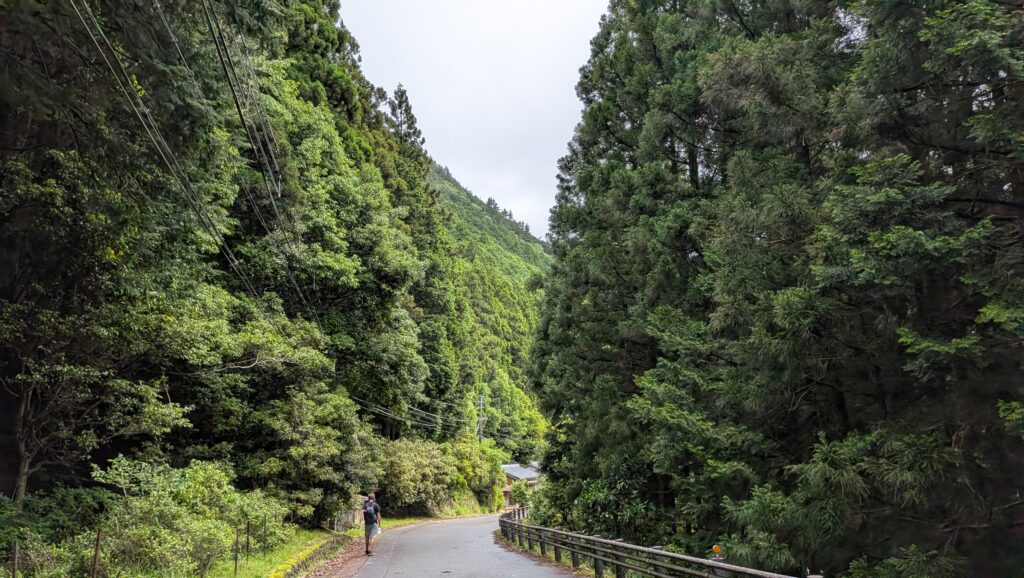
Preferred hiking boot: Out of mine and Connor’s hiking boots, mine have held up best. I chose Salomon’s X ULTRA 360 EDGE MID GORE-TEX.
Electronics / entertainment
We kept electronics to a minimum, but plenty of other people will choose to load up here with varying pieces of equipment.
- x1 laptop each
- x1 worldwide travel adapter with USB and USB-C
- Earphones
- Kindle/ book
- Notebook for doodles/diary entries
- Deck of cards for entertainment
Why a laptop: Having a laptop each has been great for entertainment, blogging and generally occupying our time on quieter days. Unfortunately, Connor’s broke recently though, so we’re down to one!
Toiletries
Just as it is easy to over pack clothes, it is very easy to pack too many toiletries.
Almost everywhere you go will have some form of pharmacy or health shop that you can buy products from. So unless you want to bring with you some very specific items, you will largely find what need everywhere you go. Unless of course you are going off-grid!
- Toothbrush, toothpaste and floss
- Hand sanitiser
- Hair brush
- Tweezers
- Nail clippers and file
- Antiperspirant
- Moisturiser and SPF
- Any required medical items
Deodorant accessibility varies: Antiperspirant can be much harder to find in some countries than you’d expect. Some countries have an abundance of antiperspirant deodorants making choice easy (e.g. Georgia, Kazakhstan, Brazil). Other countries have very limited choice or just one brand (e.g. Japan, South Korea). Expect to experience the highs and lows of trying to find antiperspirants on your travels.
Menstruation product access varies: Pads are very common and easy to find in convenience stores, supermarkets and pharmacies. However, from country to country ease of access to tampons really varies. For example, large supermarkets are likely to stock them, but smaller convenience stores may not. If you have a preferred brand, consider bringing enough for the first few months/ saving them for a country you notice you cannot find them easily.
Toiletries bag with a hook: Before travelling I saw articles stating that you need a toiletries bag with a hook. This is not a necessity.

Our top 5 most useful miscellaneous items
Some of the smallest items in our backpacks have ended up being the most useful. None of these are absolute necessities (perhaps except the VPN), but after 10 months of travelling, we’d happily pack every single one again.
- 1. A VPN – we chose NordVPN
Having NordVPN has been invaluable while travelling. It allows us to securely use public Wi-Fi, provides extra peace of mind when logging into online banking or other personal accounts, and helps us to access services that are restricted by location (including BBC iPlayer and ITV-X). NordVPN has been great so far, feeding our ‘The Traitors’ addiction. Though it was patchy in Uzbekistan and whilst we didn’t visit China, we heard it may not work well there too.
Get 75% off + 3 months extra here.

- 2. A washing line – we chose Sea to Summit’s clothesline
One of Connor’s favourite items. When there has been nowhere to dry hand-washed clothing, this has been a great solution.
- 3. Microfibre towels (one each)
Not every accommodation provides a towel. Having a fast-drying microfibre back up towel is really handy.
- 4. An eye mask
Simple but effective. Great for overnight buses and annoyingly bright hostel rooms.
- 5. A micro-fibre hair towel – Georgina chose Noughty’s hair turban
Georgina’s personal favourite. Helps me to avoid dripping wet hair, especially when towels can be limited.
None of these items are particularly exciting, but they’re worth their weight and make life a little easier whilst out on the road.
Honourable mentions: A compressible small day pack – to avoid unpacking our smaller backpacks. A cross-body satchel – for daily use. A running belt – to store keys/ phone during runs. Compression packs – great for compartmentalising clothes.
Things we’ve bought whilst travelling
Along the way Connor and I have picked up all sorts of things. From cool pieces of art and unusual local handicrafts to extra pieces of clothing. But there are some items we’ve purchased which we just didn’t think to pack in the first place.
- Lightweight gloves
- Joggers
- A warm hat
- Extra t-shirts
- Replacement underwear and socks
- New everyday trainers (to replace our original pair once they were worn out)
Packing for cooler climates: Looking back on what we’ve purchased along the way, there’s a clear pattern. Most of our unanticipated purchases have either been extra layers for colder climates or replacements for items that naturally wore out.
Importance of leaving space: Really it proves again that we don’t need to bring everything with us from the start. Items can be bought along the way just fine (and for good prices). Secondarily it emphasizes my point that before you leave try to leave some extra space in your backpack to account for extra purchases.
Things we packed but wish we hadn’t
As much as we hadn’t anticipated purchasing extra thermals, there were items we packed that we wished we hadn’t. We ended up sending these back home.
- Reusable water bottle
- Portable charger
Portable charger – that’s controversial: Yes, it sounds a bit strange in this day and age. Whilst a portable charger has been useful in cases of needing an extra boost of battery. In most cases we have had access to plugs or a charger port already installed on transport options across Asia & LATAM. Our phone batteries will last the day, so perhaps that’s why they’ve been our least used item.
Sending parcels home: Over the course of 10 months, we have picked up cool souvenirs, pieces of art and the odd random gift. We haven’t been able to carry these on us. Sending parcels home is easy, but can be expensive. Choose a local courier to keep costs lower. South Korea and Sri Lanka are surprisingly affordable to send items home (c.£35-£40 to send a 3-4kg parcel to the UK).
Closing thoughts
This packing list reflects our style of travel. We enjoy hiking, running and spending time outdoors, so if your trip looks different: more city breaks, slower travel or warmer climates, you may be able to pack even less!