Kyrgyzstan, where horses are a man’s best friend, and a national dish (five-finger horse).
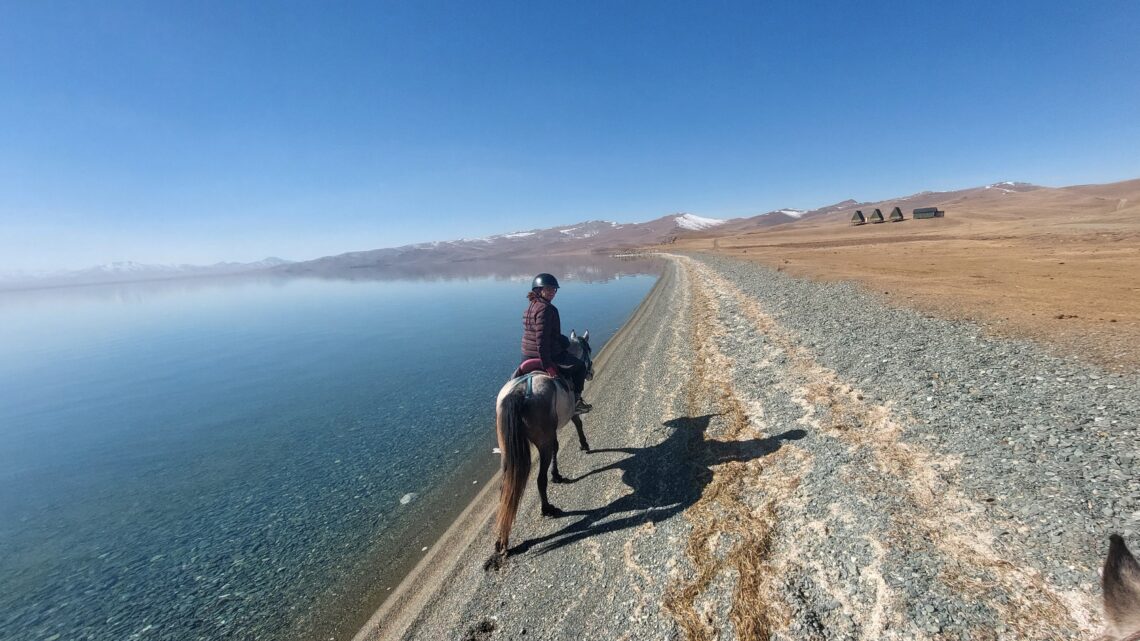
As well as consuming horse, a must-do in the nation is to go on a nomadic horse trek. The trek we opted for was Song-Kul Lake with Terra Montis Adventures.
Day 1: Kyzart to Shepherd’s Hut Valley (overnight stay)
You’ll start your trek in Kyzart, a town with nothing to do except admire the mountains in the distance. Kyzart is the gateway to Song-Kul Lake, so you only need to arrive the day before your trek.
You can ask for a demonstration of how to ride the horse before saddling the beast. The main instruction will be to say choo, meaning “go”.
Our horses were brothers: Coco and Jambo, named after the popular song by Mr. President, a tune synonymous with school discos and perfectly matching the pace of the two stallions.
Leaving Kyzart, you’ll slowly begin climbing the mountains south of the town for around 3–4 hours. We did the trek in October and saw no other groups on the whole tour – I’m told this would be impossible in summer.
A highlight was seeing numerous groups of wild Kyrgyz horses. These caused a stir on approach, as our horses would get distracted and start following the herd, but with a few strong pulls and desperate attempts of choo choo, you’ll get back on track.
Arriving at the shepherd’s hut in the valley, where multiple tours and travellers also showed up, we were shown our yurt for the night. The only worry we had was the -10°C temperature at night, but with heaters and extra blankets, our worries were quickly squashed.
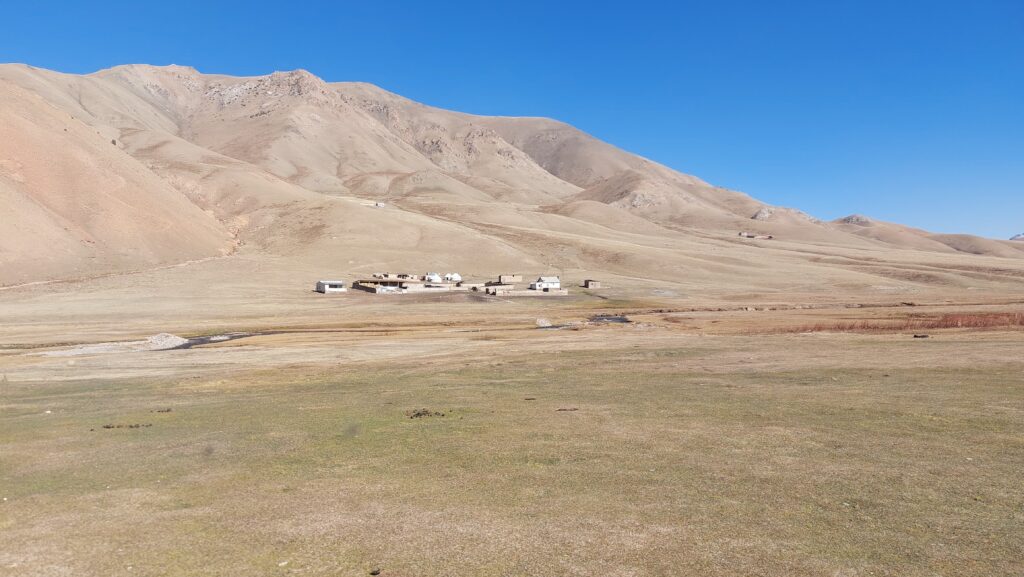
You’ll have plenty of time to explore the valley. Instead, we preferred to challenge our guide to multiple games of chess after stating we were veterans of the game. We did not win once.
Meals were cooked and prepared by the owner of the hut. Before departure, Gina requested vegetarian dishes, which meant our guide and I had to follow suit. Our guide was visibly pissed off about this.
Day 2: Shepherd’s Hut Valley to Song-Kul Lake (overnight stay)
After breakfast, you’ll start the real climb up the mountain. It’s pretty much uphill the whole way, with only a few downhill sections.
Going uphill is definitely more comfortable, though the horse might disagree.
This was my favourite day of the trek, the route boasts spectacular backdrops of the mountains, and a very small Kyzart town.
You can request to stop at the highest point of the trek, at 3,400 metres. Here is the first point you can see Song-Kul Lake.
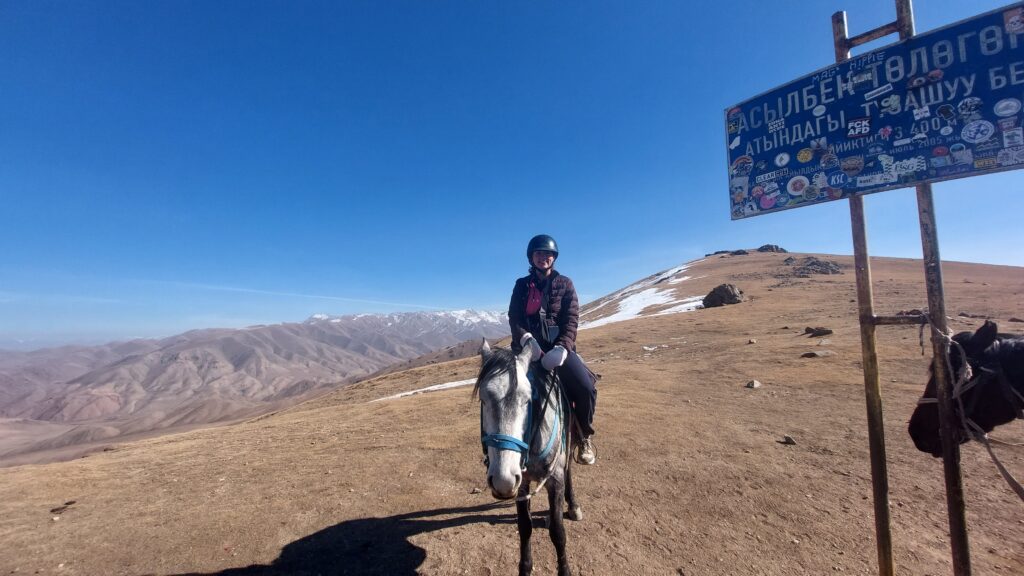
When Coco and Jambo locked eyes on the lake, it was the first time they started galloping, which made the ending quite sporty.
The accommodation was more basic at Song-Kul, and slightly colder.
The lake looked very inviting, so I decided to go for a dip so I can say I have swum 3,200m high, Gina went in knee-high though, so I wouldn’t count it.
Day 3: Song-Kul Lake to Kyzart (end of trek)
Roles are reversed on the descent, as the horses get to enjoy galloping down the mountain while you endure the excruciating pain.
For the return leg, you’ll go the most direct route from Song-Kul to Kyzart.
Despite the challenge of facing down the mountain, I actually enjoyed it. Georgina, on the other hand, did not. In fact, she had to climb off at one point, as Coco, her horse, had decided to create his own path down the mountain.
To end the trek, we sat down with our guide and his family to enjoy one last meal in a yurt. They were kind enough to give us a lift to a known hitchhiking zone so we could avoid paying a hefty taxi price to leave Kyzart.
How to book a horse trek?
Horse trekking is very straightforward to book, you’ll have plenty of operators to choose from online. We used Instagram, and paid 300 dollars each for a 3-day trek to and from Song-Kul Lake (all accommodation and meals/drinks included).
In terms of price, you could get a cheaper rate if you don’t go for an English-speaking guide. Speaking to another traveller, they paid 220 dollars each with all accommodation and meals/drinks included.